
Master plant dieta

Noya Rao: The Tree of Light (Palo Volador)

Noya Rao is one of the rarest master plants of the Amazon. The Shipibo know it as the flying tree, and its fallen leaves glow in the dark. At AYA you can diet Noya Rao with Don Miguel, and stand in front of seven young trees he was shown in his dreams.

Quick answer

  • What it is: a very rare Amazonian tree, and one of the most respected master plants in the Shipibo tradition.
  • The name: in Shipibo, noya means flying and rao means plant spirit. In Spanish it is Palo Volador, the flying tree. It is also called the Tree of Light.
  • What it is dieted for: clarity, intuition and a deeper connection with the spirits of other plants. In the Shipibo tradition, dieting its bark is part of the path to becoming a healer.
  • At AYA: dieted under the guidance of Don Miguel. Nine Noya Rao trees grow here: one that is probably 300 years old, one about 50 years old, and seven young trees.
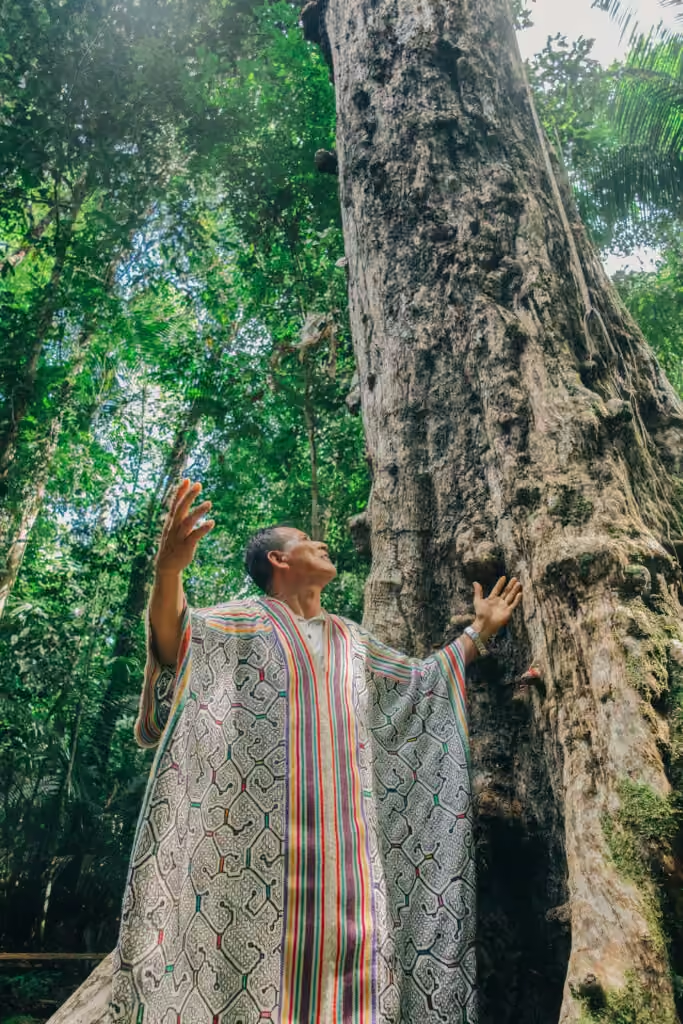
Don Miguel standing with raised arms in front of a Noya Rao tree
Don Miguel with Noya Rao

Noya Rao is a mythical tree. The Mahua Shipibo have used it in sacred ceremony for centuries, and dieting its bark is believed to be essential on the path towards becoming a healer.

It is also one of the rarest trees of the Amazon. Until now, only five mature Noya Rao trees were known. Today seven young trees are also growing at our centre. The mature trees are said to glow in the moonlight, and to hold a unique energy and capacity for deep healing.

What is Noya Rao?

Noya Rao is a master plant, a teacher. In Shipibo, noya means flying and rao means plant spirit, which is why she is affectionately called the flying plant spirit. In Spanish her name is Palo Volador, the flying tree.

When her leaves fall they glow brightly in the dark. That is one reason people who seek her also call her the Tree of Light.

The Tree of Light

Her fallen leaves glow in the dark, and the trees are said to glow in the moonlight.

The flying plant spirit

Noya is flying and rao is plant spirit in the Shipibo language.

Palo Volador

The tree that makes you fly

Noya Rao means the flying tree. In the legends the Shipibo elders tell, fish that touch the tree turn into birds and fly out of sight, and birds that perch on its branches become fish.

That is why they say Palo Volador makes you fly as well.

Read the legends

New at AYA

Seven young Noya Rao trees, found through a dream

Noya Rao is so rare that for many years Don Miguel looked for a way to propagate it. He tried with cuttings and he tried with seeds. For many years it was impossible.

In 2025 the direction came to him in his dreams. He was shown a place deep in the jungle where several baby Noya Rao trees were growing, each only about 20 centimetres tall. He went there, found them and brought them back.

Don Miguel planted them at our centre, where he can care for them himself and make sure they are safe. Today seven young Noya Rao trees are growing there beautifully. In just one year, some of them are already two to three metres tall.

Guests can stand right in front of them and connect with them.

Nine Noya Rao trees at AYA

Two Noya Rao trees were already growing here long before AYA. Together with the seven young trees, there are now nine.

300 years

The oldest tree is probably 300 years old and about 20 to 25 metres tall. It stands deep in the forest, and we go there to see it glow.

50 years

The second tree is about 50 years old. Like the oldest one, it was here before us.

7 young

Seven young trees, found in 2025 and planted at the centre by Don Miguel.

The Noya Rao dieta

What Noya Rao is dieted for

These are traditional and spiritual uses as the Shipibo tradition describes them. They are not medical claims.

What the dieta is said to bring

  • A deeper connection with the spirits of other sacred plantsConnection
  • Mental clarity and organised thoughtClarity
  • Stronger intuitionIntuition
  • Seeing your own unconscious assumptionsInsight
  • Courage to leave limiting beliefs behindCourage
  • A step on the path to becoming a healerThe path

Dieta guidelines

  • Often done in seclusion, guided by an experienced curanderoSetting
  • No sex or masturbationBody
  • No pork, red meat, oil, salt, sugar or chocolateFood
  • No papaya, watermelon or mangoFood
  • No caffeine or alcoholDrink
  • No scented toothpaste, soap, deodorant or repellentCare

The terms of each dieta are particular to the person. They are set by the curandero together with the spirit of the plant.

Watch: Noya Rao

Noya Rao, the Tree of Light

The legends of Noya Rao

The Shipibo people hold many stories that have given Noya Rao her mythical status. Shipibo elders Don Miguel and Maestra Juanita are the custodians of two of them.

The myth of Noya Rao, as told by Don Miguel

The setting for this legend is an ancient Shipibo village, to the north of the Ucayali river mouth, somewhere between Pucallpa and Iquitos.

One day while out walking, the chief of the village found a tall tree on the river’s edge and was mesmerised by the transformation he witnessed in both the nearby fish and birds that came into contact with it. The chief stood on the bank and watched as fish transformed into birds and flew out of sight and as birds, perched on the tree’s branches transformed into fish, diving deep below the surface of the water. After witnessing what he took to be a miraculous happening, he walked quietly back to his village. That night, the tree showed up in his dream and spoke to him. It said that if he used its bark medicinally, he too would be able to fly.

The following morning, guided by this vision, the chief went back to collect the tree’s bark as he was instructed to do. The chief made a special tincture from the bark and used it to encircle the village, drawing a subtle line in the earth around the entire camp. The chief then gathered his people and told them that for three consecutive nights nobody was allowed to leave the village, as they were to throw a huge celebration. On the first night of the celebration while everyone was drunk on Masato, the youngest son of the chief decided to run into the jungle alone, to find and play with the tree that this father had described. While the boy was playing beside the tree he felt strong vibrations in the earth but thought nothing of it. He continued to play and retuned home as the sun was rising. 

The celebration continued the next day and that night, the second night of the celebration, the young boy left again, alone, to visit and play beside the tree. The vibrations in the earth were stronger this time, but he continued to play until morning. On the third night of the celebration the chief’s son disappeared again but because the villagers were so intoxicated by Masato, not one of them noticed he was missing. During the night, the vibrations in the earth were stronger yet again. In the first hours of the morning, as the boy was returning quietly home, he saw from a distance that his entire village was being torn from the earth. 

Terrified, the boy broke into a run, in the direction of his home, but it was too late as the village was too high above the earth for him to reach. He screamed his father’s name like death but nobody could hear him as the celebrations continued unperturbed. The village continued to rise above the clouds and disappeared into the sky leaving the young boy alone on the ground below. Today that Shipibo village is still missing, and many believe that it has become a star in the night sky.

The myth of Palo Volador, as told by Maestra Juanita

The setting for Maestra Juanita’s legend is a small Shipibo village to the north of the Ucayali river.

In this small, isolated village was a young boy who lived on his family’s farm together with his mother and brothers. On the river’s edge, there was a majestic tree, known to the villagers as Noya Rao. Many had witnessed fish who contacted the tree transform into birds and soar up and out of sight. The young boy used to disobey his mother and in order to avoid working the family’s farm he would run far into the jungle spend his days playing in the river water beside the tree.

One day, his mother became worried as the boy had not returned by dark. Days passed and the boy never returned. Despite desperate attempts to locate the boy, he was never found. His mother continued to call his name for years, and the village people came to believe that he too transformed into a beautiful bird and flew far away.

Upon listening to the stories recounted by the Shipibo elders, it is evident that this tree is understood as having the power to profoundly transform lives and communities, quite literally. Based on my own experience of undergoing a dieta with this profoundly mystical plant, I too have come to appreciate that palo volador possesses the unique means to affect meaningful change within us, for the better.

My journey with Noya Rao

By Elio Guesa

On the day of my 33rd birthday, I encountered Noya Rao for the first time and on January 1st, 2017, I began a twelve-month dedicated Dieta with her.

For thousands of years the Shipibo curanderos have been connecting with and working medicinally with this tree. They have cultivated an enduring relationship with this spirit and some say that they have been receiving etheric chips from the spirit realm, which they implant into people during ceremony. These seeds are believed to inhabit the dietero(a) and continue to grow inside them for the duration of their natural life. The implanting of these etheric chips is the method the Shipibo people use to heal others and to initiate recipients into the healing profession.

One of the brothers of the family who I was staying and studying with at this time believed that he had a wife in the spirit realm and a child in the tribe of the Chaikuni people who also inhabit the spirit realm. He told me that his son would gather these etheric chips and send them down to him in the physical realm to use as needed. One day, this brother, a highly revered Shipibo curandero received a message that Palo Volador had returned to the human dimension. He wasted no time and that day embarked on a journey in search for the tree. Some days later, exhaling smoke out through his tobacco pipe, he discovered the tree, in all its majesty on his daughter’s land.

Whilst completing my Dieta with Noya Rao, I was visited both during our nightly Ayahuasca ceremonies and in my dreams, by bright, vivid, ethereal beings of light; unlike anything I had encountered before. This experience ended in me shaving off the dreadlocks that I had spent the last seven years of my life growing. This symbolic gesture felt like the perfect wearable emblem for the mysterious transformation I had experienced. After expressing my deepest gratitude, I buried my hair in the earth next to her.

I can’t say exactly how they did, but these beings helped me to discover what I’ve come to regard as ‘my true self.’ After these nightly encounters, the masks that I had been wearing in my relationships, and the roles that I had been playing, quickly dissolved and I entered a state of being that was (and is) the most authentic and fulfilling I have ever known.

Nine years later, that connection is still with me. I proposed under the Noya Rao tree, and today we are married. You can read our Noya Rao love story.
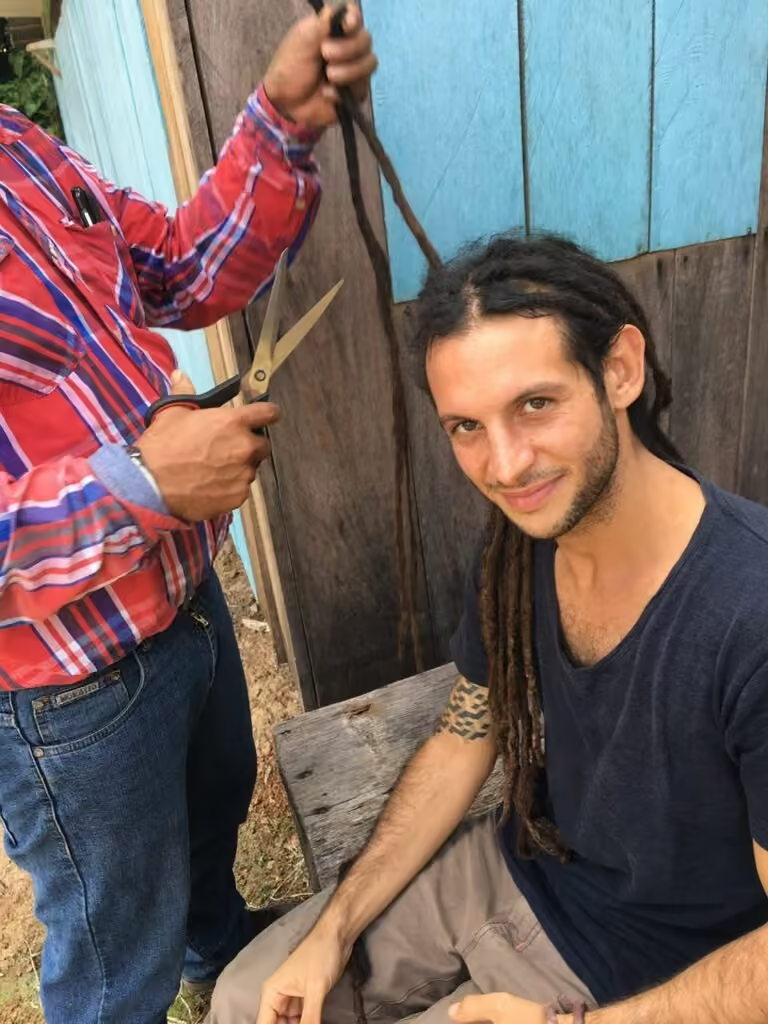
Dreadlocks being cut at the end of a twelve-month Noya Rao dieta
Cutting the dreadlocks at the end of the dieta
Safety first

Safety and screening

Noya Rao is given only after our medical screening, and under the guidance of Don Miguel.

A dieta asks for real discipline in food, in behaviour and in thought. It is not something to do on your own.

Do not stop or change a prescribed medication on your own. List every medication, supplement and health condition on your application, and tell us if you are pregnant or breastfeeding.

On your application

Have a medical concern?

Tell us about every medication, supplement and health condition. Our team reviews each application before a plant is prescribed.

Start Your Application

Noya Rao Voice of Light retreats in 2027

Eleven days in Iquitos, Peru, with Shipibo ceremonies, a Noya Rao dieta and vocal activation.

About the Voice of Light Retreat

Frequently Asked Questions

Quick answers about Noya Rao.

Is Noya Rao a psychedelic?

Noya Rao is not taken for a psychedelic experience in the way ayahuasca is. It is dieted as a master plant, and dieters describe its teachings arriving in dreams and during ceremony.

What does Noya Rao mean?

In Shipibo, noya means flying and rao means plant spirit. In Spanish the tree is called Palo Volador, the flying tree. It is also known as the Tree of Light, because its fallen leaves glow in the dark.

How rare is the Noya Rao tree?

Very rare. Until now, only five mature Noya Rao trees were known. Seven young trees are now growing at our centre, where Don Miguel cares for them.

Can I see a Noya Rao tree at AYA?

Yes. There are nine Noya Rao trees at AYA. The oldest is probably 300 years old and stands deep in the forest, where we go to see it glow. Another is about 50 years old. Seven young trees grow at our centre, and guests can stand right in front of them.

What are the rules of a Noya Rao dieta?

No sex, alcohol, caffeine, pork, red meat, oil, salt, sugar or chocolate, no papaya, watermelon or mango, and no scented personal care products. The exact terms are set for each person by the curandero. Start with our ayahuasca diet guide.

Have more questions?

Our full FAQ covers medications, what to pack and what a retreat day looks like.

Read the Full FAQ

Meet Noya Rao with us

Diet the Tree of Light in Iquitos, Peru, guided by Don Miguel.